-
The chairman of Saudi Arabia’s General Commission for Audiovisual Media, Dr. Riyad Najm, said his commission will start putting restrictions on content produced online, including on YouTube.
-
Users in Qatar, UAE, Yemen, and Kuwait reported that they are not able to access the blog hosting platform tumblr.com or any blog hosted by the platform. Interestingly, the decision to block the site was actually made in Canada by the company that provides filtering technology to the ISPs in those countries.
-
Syrian government-run al-Thawar newspaper has accused Facebook’s administration of conspiring against the Syrian people. The paper has also announced that pro-regime Syrian programmers are currently preparing a surprise for Facebook.
-
Determining whether a Web site is blocked by a state filtering regime is sometimes a complicated issue that goes beyond finding out whether the site is simply accessible or inaccessible, and requires a multi-disciplinary approach, which ONI has been uniquely employing in its research.
-
By banning access to the Web site of Rachad Movement, Algeria joins an increasingly expanding list of government Internet censors in the Middle East and North Africa.
-
The UAE unblocks access to Web sites on the Israeli country code top-level domain “.il."
ONI noticed earlier this month that .il Web sites have been accessible from the UAE, and has since been testing for filtering of tens of .il Web sites from different categories including government, politics, religion, and entertainment. All sites have been found consistently accessible via the country's two ISPs, Etisalat and du.
-
Categories:
As the debate over Internet censorship has intensified around the globe, many researchers, journalists, and human right advocates have been increasingly interested in the role of Western firms in state sponsored-imposed censorship regimes.
-
In addition to technical filtering and surveillance practices, more countries in the Middle East impose restrictions on Internet use in cyber cafés. The latest example comes from Saudi Arabia where Internet cafés have been ordered by the Ministry of Interior to install hidden cameras and provide a record of names and identities of their customers, as reported by Saudi Gazette.
-
Dubai police chief launches a campaign to block youtube, less than two weeks after the UAE blocked access to content deemed offensive to Muslims.
-
Middle East countries continue to censor content deemed offensive to Muslims
-
Should we expect companies to give clear and timely information when users’ privacy and freedom of speech have been jeopardized, especially if this is due to government restrictions which may conflict with the internationally recognized human rights of freedom of expression and privacy?
-
While many Internet users in the Arab world demand access to more online content, other users campaign to have content blocked.
-
A popular UAE blog, often critical of UAE politics and social issues, has been been blocked a few days after it published an analysis of the impact of the global financial crisis on the UAE economy.
-
ONI is currently monitoring a cyber war waged by a group of Sunni Muslims who managed to hack significant Shiite and Iranian Web sites, the number of which has reached 300, according to the Iranian Fars News Agency. The agency reported that the hacking group is based in the United Arab Emirates (UAE) and that it includes 250 IT experts who have spent over $300 million to hack the main server of Shiite sites belonging to the International Institute of Al-ol-Beit.
-
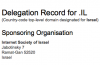 The UAE unblocks access to Web sites on the Israeli country code top-level domain “.il." ONI noticed earlier this month that .il Web sites have been accessible from the UAE, and has since been testing for filtering of tens of .il Web sites from different categories including government, politics, religion, and entertainment. All sites have been found consistently accessible via the country's two ISPs, Etisalat and du.
 In addition to technical filtering and surveillance practices, more countries in the Middle East impose restrictions on Internet use in cyber cafés. The latest example comes from Saudi Arabia where Internet cafés have been ordered by the Ministry of Interior to install hidden cameras and provide a record of names and identities of their customers, as reported by Saudi Gazette.
 Dubai police chief launches a campaign to block youtube, less than two weeks after the UAE blocked access to content deemed offensive to Muslims.
 Middle East countries continue to censor content deemed offensive to Muslims